Vinyl, Laminate or Tile: Choosing a Kitchen Floor That Survives Kids and Pets
The right kitchen floor depends on what happens when water sits on it, and on who lives in the house.
October 13, 2026 · 4 min read
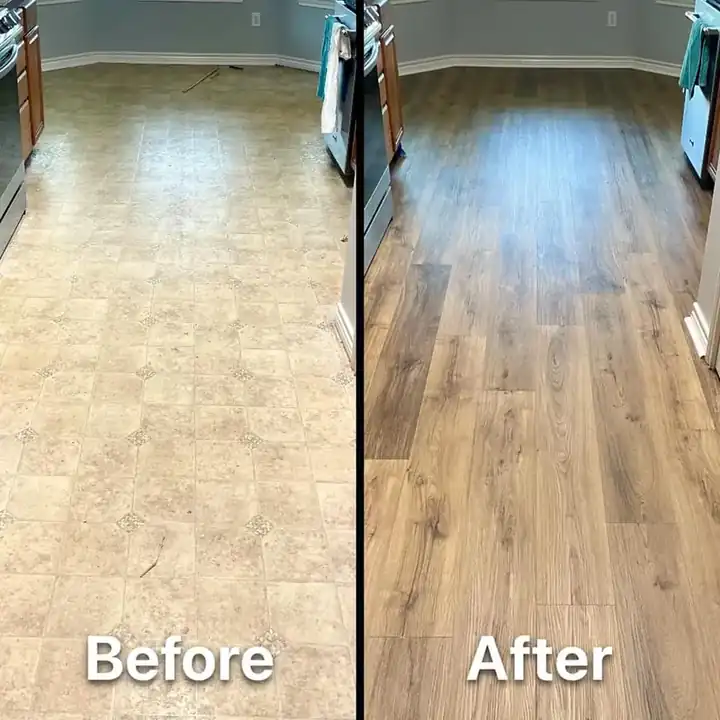
A kitchen floor takes more punishment than any other floor in the house. The dishwasher leaks once, a kid tips a full cup of juice, the dog drags a wet bowl across the room, and pasta water finds the floor most nights of the week. Picking a floor for that room has less to do with which sample looks best on the showroom table and more to do with what happens when water sits on it for an hour.
Start with what happens when water sits
Every kitchen floor gets wet. What separates one material from another is where the water goes next. On a waterproof surface it stays on top until you wipe it up. On a water resistant one it buys you some time. On the wrong material it works into the seams, then into the core, and the damage shows up weeks later as swollen edges, lifted boards or a smell that will not go away.
Keep that in mind as you look at the three common choices for East Texas kitchens: vinyl and SPC plank, laminate, and tile.
Vinyl and SPC plank: the easy answer for most busy kitchens
Luxury vinyl plank and tile, usually shortened to LVP and LVT, is the floor most families with kids and pets end up asking about for a kitchen. SPC stands for stone polymer composite. Its core is made of crushed limestone and polymer, which makes it one of the strongest waterproof floors on the market. It is also scratch and dent resistant, so a dropped pan or a dog skidding around the corner does less damage than it would on wood.
These lines are floating floors with a click-locking system, which means the planks connect to each other instead of being glued down. Some lines come with a 3-in-1 underlayment pad already attached. That pad works as a sound reducer, a vapor barrier and a cushion, so the floor is quieter and a little softer underfoot. Because a floating floor rides on top of what is beneath it, the subfloor needs to be flat and sound before anything goes down. A good installer checks that first, and it is one reason an in-home look beats a guess from a photo.
Laminate: read the label on the water claim
Laminate is built on a high density fiberboard core with a printed wood or stone look on top. Here is the detail that trips people up: some laminate lines are water resistant and others are waterproof, and the two words do not mean the same thing. Water resistant gives you a window to wipe up a spill. Waterproof is built to handle more than that.
In a kitchen, find out which one you are looking at before you fall for the pattern. A fiberboard core that gets soaked at the edge of the dishwasher will swell, and swelling does not go back down. If you love a laminate look, choose a waterproof line for the kitchen and keep the water resistant ones for a bedroom or a hallway.
Tile: porcelain is the tougher of the two
The two major types of tile are ceramic and porcelain. Porcelain is fired at a higher temperature, which makes it much denser and slightly more water resistant than ceramic. In a kitchen that difference matters. Tile also ignores pet claws and shrugs off spilled water.
The tradeoffs are comfort and care. Tile is hard and cold underfoot, and a dropped glass will not survive it. The grout lines are the part that needs attention, since grout collects dirt and has to be kept clean. Pick a tile that is slip resistant, because a smooth glossy tile turns into an ice rink the first time someone walks in with wet socks.
Why hardwood stays out of the wet zone
Hardwood is beautiful in a living room or a hallway. In a kitchen it is a gamble. Solid wood and engineered hardwood both react to moisture, and the standing advice is to avoid installing either one in wet areas such as the kitchen and bathroom. If you want the look of wood in a kitchen, a wood-look vinyl plank or wood-look tile gives you the pattern without the risk.
A quick way to sort it out
- Small kids and constant spills: vinyl or SPC plank, because the surface is waterproof and shrugs off scratches and dents.
- Dogs or cats with claws and the occasional accident: SPC plank or porcelain tile, both of which hold up to claws and cleanup.
- You want the look of stone and do not mind a firmer floor: porcelain tile, chosen in a slip resistant finish.
- You love a laminate pattern: pick a waterproof laminate line, not just a water resistant one.
- Your heart is set on real wood: keep it for the dry rooms and use a wood-look floor in the kitchen.
Tell us about the household, not just the room
The best recommendation depends on more than square footage. Family size, how many pets you have and how the kitchen actually gets used all change the answer. Those are the things Best Budget Flooring asks about first, so the estimate fits your budget. The kitchen in the photo above went from beige ceramic tile to long, warm vinyl planks.
If you are in Tyler or anywhere inside their 50 mile radius, call or text (903) 805-0018 to schedule a free in-home estimate. You can also walk into the showroom at 16958 FM 2493 in Flint, just south of Fresh Grocery on Old Jacksonville Highway, and handle the samples.
Best Budget Flooring & Remodeling, (903) 805-0018
Call (903) 805-0018More articles
Sand and Finish or Start Over: What to Do With Tired Hardwood Floors
Most worn hardwood can be restored, but a few problems cannot be sanded away.
Getting Your House Ready for New Floors: A Before-Install-Day Checklist
Install day goes smoother when the house is ready before the crew walks in.