Sand and Finish or Start Over: What to Do With Tired Hardwood Floors
Most worn hardwood can be restored, but a few problems cannot be sanded away.
October 13, 2026 · 4 min read
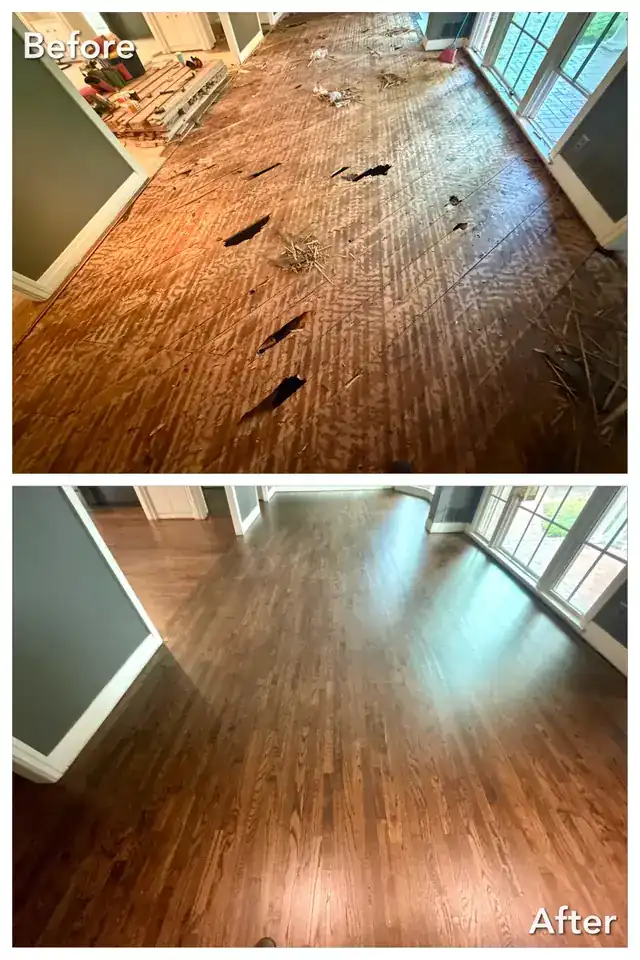
Dull, scratched hardwood makes a house look older than it is, and the first instinct is often to rip it out. Before you do, know that real hardwood can be sanded down and restored more than once. A floor that looks finished may only need its top layer renewed, and that is a smaller job than new floors from the subfloor up.
What sanding and finishing can fix
Sanding takes off the worn finish and a thin layer of wood beneath it, then a fresh finish goes on. That handles the problems that live at the surface: a dull coating, a web of fine scratches, traffic paths worn through the finish in front of the sink and the back door, and light stains that have not gone deep into the wood. Because the surface is bare for a moment, it is also the chance to change the tone of the floor if the old color has stopped working for you.
The photo above is a before and after from the crew's work. A worn, damaged hardwood floor on top, a warm and even refinished floor underneath. That kind of change is what refinishing is for.
What sanding cannot fix
Some problems sit deeper than any sander reaches. Cupped or buckled boards, where the edges have lifted from moisture, usually point to a water problem that has to be solved before anyone touches the finish. Dark stains from pet accidents that soaked through the wood stay dark. Soft or springy spots tend to be a subfloor problem, and no coat of finish will repair that. A floor that has already been sanded several times may not have much wood left above the tongue and groove.
Engineered hardwood is the other limit. It has a solid wood veneer over a composite core, usually plywood, so the amount of sanding it can take depends on how thick that veneer is. Solid hardwood is the type that can be restored again and again.
A few checks you can do yourself
- Walk the floor and press with your foot. Springy or soft areas point to a subfloor problem that has to be fixed first.
- Look at the board edges. Edges that sit higher than the middle of the board are cupped from moisture.
- Check the board thickness at a floor vent or a doorway threshold. A thick wear layer has room for another sanding.
- Find out whether the floor is solid or engineered. The edge of a board at a vent shows plywood layers if it is engineered.
- Note where the dark stains are. A stain that stays dark after cleaning usually means the wood itself is affected, not just the finish.
If two or more of those turn up, have someone look at the floor in person before you decide on anything.
What a sand and finish job asks of your household
Refinishing is usually quicker than replacing, but it comes with rules, and they are worth taking seriously. The room temperature needs to stay between 70 and 74 degrees. Nobody walks on a freshly coated floor for 48 hours. Furniture stays off it for 72 hours. Those windows exist because the finish has to cure undisturbed, and a footprint or a dragged chair leg in wet finish becomes part of the floor.
Plan for that window ahead of time. Decide where everyone sleeps and which door you use to come and go, because the coated rooms are off limits. Keep pets out of them, since paws on a fresh coat leave marks. Set the thermostat early so the house is already in range when the crew arrives. If you need furniture moved out and back, the crew can do it for an additional cost, so bring it up when you schedule.
When replacing makes more sense
Replacement is the better call when the problems above are widespread: water that got under the boards, a subfloor that has gone soft, or a floor sanded thin by earlier refinishing. It also makes sense when the room itself has changed. Hardwood does not belong in wet areas such as a kitchen or bathroom, so if your old wood floor runs into one of those, you may be better off with a waterproof wood-look vinyl plank there and refinished wood in the dry rooms.
Vinyl and SPC planks are a practical way to get a wood look in the places where wood struggles. They are waterproof, scratch and dent resistant, and a good fit for homes with children and pets. Some homes end up with both: refinished hardwood in the living areas and vinyl where the water is.
Get a second pair of eyes
Photos only tell you so much about a floor. Best Budget Flooring offers a free in-home estimate, and when you call they talk through the type of home you have, the family and the pets, so the plan fits your budget. Call or text (903) 805-0018 from anywhere around Tyler, and the visit will show whether your floor needs a refinish or a replacement.
Best Budget Flooring & Remodeling, (903) 805-0018
Call (903) 805-0018More articles
Vinyl, Laminate or Tile: Choosing a Kitchen Floor That Survives Kids and Pets
The right kitchen floor depends on what happens when water sits on it, and on who lives in the house.
Getting Your House Ready for New Floors: A Before-Install-Day Checklist
Install day goes smoother when the house is ready before the crew walks in.